School Floor Sanding in Kent, TN24
School floor sanding in Kent, TN24, requires more than taking a machine across tired floorboards. In Ashford’s busy primary schools, nurseries, academies and independent education buildings, timber floors endure constant foot traffic, dragged classroom furniture, cleaning chemicals and the occasional water spill. Once the protective lacquer wears through, dirt settles into the grain, exposed joints begin collecting moisture, and previously sound flooring can become a hygiene and slip hazard.
At Floor Sanding Kent, we approach educational flooring as a working part of the building, not simply a decorative surface. Our School Floor Restoration in Kent service covers worn parquet blocks, traditional strip flooring, hardwood corridors, assembly halls and timber classrooms. The aim is straightforward: repair the underlying defects, remove failed coatings and specify a hard-wearing finish that suits the school’s daily use.
Some floors need a complete sanding and sealing programme; others can be brought back into service through targeted repairs and School Floor maintenance in Kent. Where the existing timber remains structurally sound, our approach to School Floor Refinishing in Kent can preserve valuable material without unnecessary replacement. We plan work around term dates, INSET days, weekend closures and restricted access periods, with the reopening schedule agreed before machinery arrives on site.

School floor sanding and parquet restoration in Ashford, Kent TN24. See the transformation from worn, scratched wood flooring to a beautifully refinished surface, with services covering Willesborough, Kennington, Sevington and South Willesborough.
Timber Floor Restoration for Schools Across Ashford TN24
Ashford has a varied building stock, and that matters when assessing timber floors. Around East Hill and the town centre conservation area, older school premises sit alongside Georgian properties, traditional brick buildings and later educational extensions. Elsewhere, schools around Willesborough, Kennington and the Canterbury Road corridor have a mixture of older classrooms, modern teaching blocks and purpose-built halls.
Victorian conversions and Edwardian institutional blocks can contain suspended timber floors with decades of repairs concealed beneath the finish. Traditional pitch pine boards may have been cut and patched for heating pipes, while older oak parquet can suffer adhesive failure following changes to heating or humidity. A modern teaching block with engineered timber over a screeded base presents a different set of problems altogether.
Access needs consideration too. A site near East Hill or the older streets around Ashford town centre may offer limited room for unloading equipment, waste handling or contractor parking. On larger campuses near Willesborough and the surrounding TN24 districts, the challenge is often keeping pedestrian routes open while several departments continue operating.
We assess those practical details before agreeing the programme. A school caretaker, estates manager or facilities team needs to know which doors will be closed, when furniture can be returned and whether the floor will be ready before pupils arrive on Monday morning.
Why School Timber Floors Wear Differently From Domestic Flooring
A domestic sitting room might see a few people crossing it each evening. A primary school corridor can experience hundreds of journeys daily, with grit carried in from playgrounds, wet shoes during winter and furniture repeatedly pushed across the same sections. General-purpose domestic finishes and supermarket floor polishes are seldom a suitable long-term answer to that level of wear.
Chemical deterioration is another common problem. Strong alkaline cleaners, excessive detergent concentration and repeated wet mopping can weaken certain coatings, leaving cloudy patches or areas where the lacquer has started peeling. Adding polish over an unstable surface simply traps contamination and can create uneven slip resistance.
Common Structural and Safety Problems
- Open joints and trapped debris: Gaps between boards or parquet blocks collect dust, food particles and cleaning residue, making routine hygiene management more difficult.
- Loose parquet blocks: Failed adhesive allows individual blocks to rock underfoot, particularly around doorways and high-traffic circulation routes.
- Uneven floor levels: Raised board edges, damaged thresholds and poorly executed historic repairs can introduce trip hazards.
- Worn slip-resistant surfaces: Polished or contaminated finishes may become hazardous when wet, especially around entrances, dining areas and toilet approaches.
- Moisture ingress: Failed seals around entrances, leaking radiators and repeated wet cleaning can encourage timber movement, cupping and adhesive breakdown.
- Excessive sanding history: Older tongue-and-groove floors may have limited remaining wear thickness, making another aggressive sanding pass inappropriate.
- Coating incompatibility: Applying modern polyurethane over wax, silicone polish or unidentified historic sealers can lead to adhesion failure.
Slip resistance deserves particular attention in educational premises. The BS 7976-2 pendulum test has long been used to assess pedestrian floor surfaces, although it has been superseded by BS EN 16165:2021. Where formal testing is required, the assessment should follow the current applicable method and consider both dry and foreseeable wet conditions.
A Pendulum Test Value of 36 or above generally indicates low slip potential under the conditions tested, but that figure is not a universal legal pass mark. The floor’s location, footwear, cleaning regime and likely contamination all affect the risk assessment. For entrances, dining areas and other sensitive locations, we recommend agreeing appropriate slip-resistance testing and finish specifications with the responsible facilities team.
Our Five-Step School Floor Sanding and Restoration Process
Proper commercial restoration starts before the first sanding belt touches the timber. We establish what is already on the floor, how much usable wood remains and whether the building’s conditions will allow the proposed coating system to perform correctly. Skipping those checks is often how a reasonably straightforward refurbishment becomes an expensive remedial job.
Step 1: Subfloor Audit, Timber Identification and Moisture Testing
We start by inspecting the existing floor construction, checking for movement, hollow-sounding parquet, damaged boards and previous repairs. Timber identification helps determine the sanding sequence and finishing system; quartersawn oak behaves differently from resin-rich pitch pine, while teak and other oily hardwoods require particular care with coating adhesion. Where necessary, we examine accessible edges and discreet test areas rather than assuming every older floor is solid hardwood.
Moisture readings are taken using appropriate timber moisture meters, with subfloor hygrometer checks where a screeded base is involved. We also consider room temperature, relative humidity and the possibility of moisture migrating from below the floor. Sealing moisture into an unstable installation can lead to cupping, blistering or premature adhesive failure.
This stage also identifies restrictions on sanding depth. If historic floorboards have already been sanded repeatedly, the distance between the surface and the tongue may be insufficient for another complete cut. In that situation, we discuss controlled abrasion, localised repair or replacement instead of risking structural damage.
Step 2: Timber Repairs, Re-bonding and Resin Gap-Filling
Loose boards are secured and projecting fixings dealt with before sanding. On parquet floors, failed blocks are lifted where practical, the old adhesive is removed, and the substrate is prepared for re-bonding. Compatible silane-based flexible parquet adhesives can be useful where controlled movement accommodation is required, provided the product suits the timber, substrate and existing floor construction.
Fine, stable joints can be treated with a resin-slurry gap-filling system using clean sanding dust and a compatible binder. This produces a visually sympathetic repair, particularly on oak and other close-grained floors. Larger or actively moving gaps may require timber slivers, flexible fillers or individual board repairs rather than a rigid slurry that will crack when the floor moves.
We also inspect thresholds, skirting junctions and timber around radiator pipework. These small details matter in classrooms where dirt accumulates quickly and cleaning teams need accessible, reasonably flush surfaces.
Step 3: HEPA Dust-Controlled Sanding and Surface Preparation
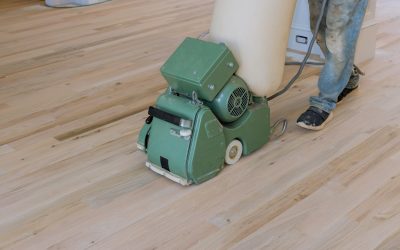
For substantial timber areas, professional belt sanding equipment such as a Lägler Hummel allows controlled removal of worn finishes and surface damage. We work through an appropriate abrasive sequence, adjusting the grit and machine pressure to the wood species, remaining floor thickness and condition. Edges, corners and restricted areas are treated with suitable edging and detail equipment.
Dust control is particularly important in nurseries, special education settings and buildings containing sensitive IT or teaching equipment. Where specified, suitable HEPA H14 extraction and independently filtered vacuum equipment form part of the dust-management arrangements. Extraction reduces airborne contamination, but it does not make mechanical sanding completely dust-free.
Work areas are segregated with suitable screening, access controls and ventilation arrangements. We check the extraction set-up, remove fine residue between operations and prevent sanding dust from spreading through occupied corridors or ventilation pathways.
Old coatings also need proper assessment. Where there is uncertainty about historic paint, adhesive or potentially hazardous materials, the relevant survey information must be reviewed before disturbance. Suspected asbestos-containing materials or lead-containing coatings are not treated as ordinary sanding waste.

Professional school floor sanding in Kent TN24, restoring worn parquet flooring to a smooth, clean surface ready for a durable protective finish.
Step 4: High-Traffic Lacquers, Hardwax Oils and Anti-Slip Finishes
The finishing system is selected according to traffic levels, maintenance expectations, timber compatibility and reopening requirements. A busy secondary school corridor generally calls for a different specification from an independent school’s timber-panelled music room. We also consider whether the finished surface will be exposed to furniture castors, sports activity or frequent damp cleaning.
Two-Component Waterborne Polyurethane Lacquers
For heavily used educational floors, 2K waterborne polyurethane lacquers are often a strong choice. These systems use a measured hardener or cross-linking catalyst to create a chemically resistant, abrasion-resistant coating. Correct mixing ratios, pot life, intercoat times and environmental conditions must be followed; adding extra hardener will not improve the result.
A relevant commercial option is Bona Traffic HD, a professional two-component waterborne floor lacquer developed for demanding traffic conditions. The manufacturer’s technical guidance identifies relatively short return-to-traffic periods under controlled conditions, although actual site release depends on the complete coating system, temperature and humidity. Light use, full traffic and covering with protective materials are separate considerations.
Hardwax Oils for Suitable Timber Areas
Hardwax oil may be appropriate for selected classrooms, heritage rooms and lower-traffic spaces where a natural timber appearance and localised maintenance are priorities. Osmo Polyx-Oil Original is one established example, combining oils and waxes to protect the timber while retaining a relatively natural appearance. It is not automatically the best specification for every school corridor or sports hall.
Oil-based systems have different drying and oxidative curing requirements from waterborne lacquers. Excess material, restricted ventilation and low temperatures can prolong curing, while oil-soaked cloths require safe handling and disposal because of the risk of spontaneous combustion.
Anti-Slip Coatings and Indoor Air Quality
Where the risk assessment calls for enhanced grip, an appropriate anti-slip additive or specialist coating system can be specified. The selection must be backed by relevant test data and, where necessary, post-installation pendulum testing rather than an unsupported claim that the finish is slip-proof. Surface contamination and subsequent cleaning practices will still influence the results.
Product emissions matter in occupied education buildings. We consider low-VOC systems and documented emission classifications such as EMICODE EC1 Plus where the specified product carries that certification. An EC1 Plus classification must be checked against the actual adhesive, coating or ancillary product being used; it cannot be assumed to apply to an entire floor system simply because one component is certified.
Step 5: Aftercare and School Floor Maintenance Protocols
A properly restored floor still needs sensible maintenance. We provide guidance on initial cleaning restrictions, recommended detergents, entrance matting, chair-leg protection and the inspection of high-wear areas. The cleaner should use a product compatible with the chosen lacquer or oil, not whichever strong chemical happens to be in the store cupboard.
We generally recommend dry soil removal as part of daily housekeeping, followed by controlled damp cleaning where appropriate. Avoid saturating board joints, steam cleaning timber or using highly alkaline degreasers unless specifically permitted by the coating manufacturer. Heavily trafficked routes should be checked periodically so a maintenance recoat can be considered before bare timber is exposed.
School Floor Sanding for Different Educational Facilities
Educational premises do not all operate in the same way. A nursery has different hygiene and safeguarding requirements from a college workshop, while a boarding school may remain occupied during weekends and holidays. We tailor access, materials and working sequences to the age of the occupants, the room’s purpose and the school’s operating timetable.
- Nurseries, preschools and Montessori settings: Timber playrooms, activity spaces and circulation areas needing straightforward cleaning and carefully managed reoccupation.
- Primary and secondary schools: Classrooms, assembly halls, parquet corridors, dining rooms and high-use communal spaces.
- Independent, private and boarding schools: Traditional timber floors, heritage interiors, teaching rooms and residential education facilities.
- Academies and multi-academy trusts: Planned refurbishment programmes across several buildings or sites, with coordinated access and consistent specifications.
- Special educational needs facilities: Controlled work zones, reduced disruption and finish selection suited to the specific users and sensory environment.
- Sixth-form colleges and universities: Lecture rooms, libraries, teaching studios, historic halls and student circulation routes.
- Vocational and technical training centres: Timber floor repairs and coatings selected around equipment loads and the actual use of each room.
- Music, art and performing arts schools: Timber studios, rehearsal rooms and teaching spaces where surface condition and furniture movement require careful attention.
- Sports academies and school halls: Specialist assessment of timber sports flooring, line markings and appropriate sports-surface coating standards.
- Language schools, tuition centres and adult learning facilities: Flexible evening or weekend programmes to avoid scheduled teaching sessions.
- After-school clubs, childcare centres and educational campuses: Sectional access planning where parts of the building remain operational beyond the normal school day.
For school sports halls, ordinary commercial lacquer is not always sufficient. Where the floor is used for organised indoor sport, the specification may need to address BS EN 14904 requirements, including surface friction, shock absorption and other relevant performance characteristics. Court markings must also be planned as part of the approved coating system.
Working Around School Hours, Safeguarding and Term-Time Restrictions
Most schools cannot simply empty an entire building for a week. Lessons continue, catering deliveries need access and cleaning staff have fixed schedules. We establish the working boundaries with the site manager and agree how equipment, materials and waste will move through the premises without interfering with occupied areas.
Out-of-hours work may involve evening preparation, overnight sanding or weekend coating, but the shortest working window is not always the most economical choice. Coatings need stable environmental conditions and sufficient curing time. A floor that feels dry to the touch may still be vulnerable to scraping, water exposure or heavy furniture.
| Working Shift | Operational Benefits | Facility Suitability |
|---|---|---|
| Overnight | Reduces interference with lessons and daytime pedestrian movements; useful for preparation and selected work stages where curing permits. | Teaching corridors, classrooms, administration areas and adult education facilities. |
| Weekend Phased | Provides longer uninterrupted access for repairs, sanding and coating, with a defined inspection period before reopening. | Primary schools, nurseries, independent schools, academies and college buildings. |
| Sectional | Allows unaffected rooms or routes to remain available while individual zones are isolated, restored and handed back. | Large campuses, secondary schools, universities, boarding schools and multi-block facilities. |

Before-and-after transformation of a commercial school timber floor in Ashford, Kent TN24, highlighting professional wooden floor sanding and restoration by Floor Sanding Kent.
Drying Times, Curing and Safe Reoccupation
We distinguish between intercoat drying, light pedestrian use and full service readiness. Some specialist 2K lacquers permit relatively early foot traffic under their stated test conditions, but heavy furniture, repeated wet cleaning and protective coverings may need to be delayed. Temperature, humidity, ventilation and the number of coats influence the final programme.
For hardwax oils, drying may extend into the following day or longer depending on the product and conditions, with full curing taking additional time. We do not use a blanket promise that every school floor can be sanded on Friday and reopened without restrictions on Monday. The agreed handover is based on the selected manufacturer’s guidance and the actual conditions on site.
RAMS, COSHH and Site Safety Documentation
Before work begins, the school or principal contractor should receive suitable Risk Assessments and Method Statements (RAMS) for the agreed activities. These cover access restrictions, equipment movement, electrical supplies, noise, dust control, manual handling and the segregation of occupied areas. Site induction, emergency arrangements and permitted working hours must be agreed with the responsible person.
COSHH assessments are required for relevant hazardous substances, including coating hardeners, cleaning chemicals and certain adhesives. Safety Data Sheets, exposure controls and ventilation requirements form part of the product review. Where the site is subject to CDM 2015 arrangements, contractor duties and coordination requirements must also be addressed.
Safeguarding is handled through the school’s own site procedures. Contractor identification, sign-in arrangements, DBS requirements where applicable, controlled access and restrictions on contact with pupils must be agreed before attendance. Dust screening alone is not a substitute for secure separation between the work zone and children.
School Floor Sanding Prices in Kent, TN24
School floor sanding costs depend on more than the square metreage. A clear, accessible oak hall with an intact subfloor is generally more straightforward than a pitch pine corridor containing loose boards, old repairs and several layers of incompatible finish. The coating specification, furniture clearance, restricted access and out-of-hours working arrangements also affect the final price.
Our published floor sanding prices in Kent provide a useful starting point, with general sanding-only rates listed from £22 per square metre and sanding with clear lacquer listed from £25 per square metre. These are guide prices rather than a fixed commercial school quotation. High-traffic coating upgrades, parquet repairs, specialist slip-resistance requirements and additional labour are assessed separately.
For educational projects, we prefer to inspect the floor before finalising the specification. That allows the quotation to identify preparation, repairs, coating materials, working hours and any exclusions. It also helps the facilities manager compare quotations on a like-for-like basis rather than choosing the lowest initial figure without knowing what it covers.
View Our Timber Floor Sanding and Restoration Work
Before deciding between sanding, re-bonding and full replacement, it helps to see what can be achieved with an existing timber floor. Our floor sanding gallery includes examples of completed floor restoration work and different timber finishes. It provides a useful reference when discussing appearance, sheen levels and the likely visual result of refurbishment.
Older school parquet may retain colour variation, historic repairs and natural grain differences after sanding. These characteristics are not necessarily defects, and attempting to remove every mark can sacrifice too much usable timber. We explain what can reasonably be improved before the work is authorised.
Experienced Timber Restoration With Proper Commercial Site Controls
A school estates team needs more than a convincing sample board. It needs a contractor who understands access permits, safeguarding, coating chemistry, fire precautions, dust containment and the consequences of failing to meet an agreed reopening date. Those are the matters we address during the survey and quotation process.
For projects requiring CSCS-carded operatives, relevant competence evidence and commercial public liability insurance, the applicable documentation should be checked and agreed before appointment. We encourage facilities managers and procurement teams to verify current cards, policy limits, RAMS and product specifications rather than relying on generic claims of accreditation.
A Clear Survey and Quotation Process
- Initial photo or video review: Send photographs of the floor, damaged sections, door thresholds and any visible moisture-related defects, together with approximate dimensions.
- Physical site survey: Inspect timber condition, existing coatings, floor movement, access arrangements and any practical restrictions affecting the programme.
- Written scope of work: Set out proposed repairs, sanding preparation, finishing systems, working shifts and expected access restrictions.
- Commercial quotation: Identify the agreed works, optional items and relevant exclusions, including any specialist testing or unforeseen subfloor repairs.
- Completion and handover: Review the finished floor, communicate the relevant curing restrictions and provide appropriate cleaning and maintenance advice.
Where possible, we also discuss future maintenance with the caretaker or cleaning supervisor. A properly specified finish can lose years of useful life through incorrect cleaning, so aftercare should be understood by the people responsible for the building every day.
Frequently Asked Questions About School Floor Sanding in Kent
Can school floors be sanded during half-term holidays?
Yes, half-term and summer holiday periods are often suitable because classrooms and corridors can remain clear for longer. The required duration depends on repairs, floor area, coating choice and curing conditions. We recommend arranging a survey well before the intended closure.
Is dust-controlled sanding suitable for an occupied school?
Professional extraction and properly sealed work zones can substantially reduce dust migration, but sanding is still an intrusive activity. Work should only proceed near occupied areas where the site’s risk assessment confirms that appropriate separation, ventilation and safeguarding controls can be maintained. For sensitive areas, a full temporary closure may be the better option.
Can old parquet flooring be repaired without replacing the whole floor?
Often, yes. Individual blocks can sometimes be lifted, cleaned and re-bonded, while compatible replacement timber may be used for missing or badly damaged sections. The decision depends on adhesive condition, substrate stability and how much sound timber remains.
How long before pupils can walk on a newly lacquered floor?
Certain commercial waterborne lacquers allow light use within hours and fuller traffic after a specified period, but that does not apply to every product. Reoccupation is determined by the manufacturer’s technical data and actual site conditions. Dragging desks, wet cleaning or laying protective coverings may require a longer restriction.
Can you restore school halls used for PE and assemblies?
Timber halls can be assessed for repair, sanding and refinishing, but floors used for formal sport may need specialist sports-surface systems. We consider existing line markings, surface friction and relevant BS EN 14904 requirements before recommending a specification. A finish suitable for assemblies is not necessarily suitable for competitive sports use.
Will the school need to close while restoration takes place?
Not necessarily. Sectional working, weekend programmes and agreed out-of-hours access can reduce disruption, although some areas must remain closed during preparation, coating and curing. The final arrangement depends on safe segregation and the availability of alternative routes and rooms.
Do you cover the wider Kent area as well as Ashford TN24?
Our Kent floor sanding service is available for enquiries from schools, colleges and other educational premises beyond TN24. Projects in Ashford, Willesborough, Kennington and neighbouring districts can be assessed according to their scope, access arrangements and scheduling requirements. Larger multi-site refurbishment programmes can also be discussed during the initial enquiry.