Key Takeaways
- Machine Power: Commercial sports hall restoration requires 3hp continuous belt sanders (Bona Belt) to ensure a perfectly flat playing surface.
- EN 14904 Compliance: Finishes like Bona Traffic HD or Junckers HP Sport are essential for meeting UK safety standards for slip resistance.
- Technical Sanding: Dense timbers like Maple or Granwood require ceramic abrasives (Bona 8700) to cut through industrial sealants efficiently.
- Line Marking: Precision lines must be ‘sandwiched’ between the second and third coats of lacquer for long-term protection.
- Dust-Free Technology: High-volume vacuum extractors (Bona DCS) are mandatory to protect facility air quality and electronic equipment.
The Problem: School halls, leisure centres, and community gyms across the South East represent some of the most challenging timber environments in the UK. These floors endure thousands of footfalls weekly, from high-impact sports to heavy chairs during community events. Over time, even the most robust industrial sealants fail, leaving the timber vulnerable to moisture, grey-staining, and splintering. A worn sports hall floor isn’t just an aesthetic failure; it is a significant health and safety liability due to lost slip resistance.
The Agitation: Delaying a restoration project can be financially catastrophic. Once the industrial lacquer is worn through, ‘grain raising’ and ‘tannin pull’ can occur, especially in the humid climate of coastal Kent and Sussex. If the bare wood is exposed for too long, the boards may warp or ‘cup,’ requiring a much deeper and more aggressive sand that significantly reduces the timber’s lifespan. Furthermore, attempting to refinish these large spans with domestic-grade equipment results in an uneven surface that can cause ‘trip hazards’ or inconsistent ball bounce, failing to meet UK sports facility standards.
The Solution: Professional commercial renovation. By utilizing heavy-duty dust-free machinery and world-class finishing systems like Bona Traffic HD, facilities can restore their floors to a mirror-smooth, safe, and durable condition. This technical guide explores the protocols for high-performance commercial floor sanding and refinishing in the UK.
Heavy-Duty Machinery: The Bona Belt System

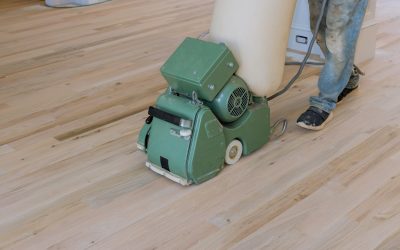
The sheer scale of a sports hall (often 400-800 square metres) demands industrial power. We utilize the Bona Belt, a high-torque machine designed for large spans. Unlike domestic machines, it maintains constant drum pressure regardless of floor undulations, ensuring a perfectly level substrate. For the perimeters and hard-to-reach areas, we use the Frank Spider or Bona Flexisand with a multi-disc drive to ensure the edge work is indistinguishable from the main body of the hall.
Grit Sequence for Hardwoods: Maple and Oak floors in UK gyms are incredibly dense. We typically start with a 36-grit ceramic abrasive pass to strip the existing industrial finish. This is followed by 50-grit and 80-grit passes. The final refinement is performed with 100-grit multi-discs to eliminate any micro-scratches, ensuring the lacquer bonds perfectly to the timber.
Precision Line Marking and EN 14904 Standards

In the UK, all indoor sports surfaces must comply with the European Standard EN 14904. This standard regulates slip resistance, force reduction, and vertical deformation. We achieve compliance by using Bona Traffic HD, which is recognized globally for its superior friction characteristics and extreme durability.
The ‘Sandwich’ Technique: Line markings for basketball, badminton, and netball are applied with specialized paints after the second coat of lacquer has dried. Once the lines are cured, a final heavy-duty coat of Bona Traffic HD is applied over the top. This ‘sandwiches’ the paint, protecting it from the abrasive friction of rubber-soled shoes and ensuring the lines remain vivid for years without peeling.
Restoring Heritage Community and School Halls

Many community centres in Kent are housed in heritage buildings with original oak or pitch pine floors. These require a more sympathetic approach than a modern gym. We use ‘water popping’ after the final sand to open the grain of the dense timber, ensuring that the primer (such as Bona Classic UX) penetrates deeply and evenly. This prevents ‘side-bonding’—a common issue where lacquer glues boards together, causing them to crack when they naturally shrink during the UK’s dry winter months.
Technical Aftercare: Maximising Your ROI
A full sand-back is a significant investment. To extend the life of the new finish, we recommend a ‘screen and recoat’ every 2-3 years. This involves a light mechanical abrasion of the top layer of lacquer followed by a single fresh coat of Bona Traffic HD. This protocol maintains the EN 14904 slip rating and prevents the timber from ever being exposed to bare wood again, potentially doubling the time between full restoration cycles.
Conclusion: A Safe, High-Performance Asset
Revitalising a sports hall is about more than just looks; it’s about facility performance and user safety. By employing industrial-grade machinery and adhering to technical grit sequences, tradesmen can deliver a floor that stands up to the rigours of UK community life. For more information, explore our technical guide to sports hall refinishing or see how heritage finishes can respect architecture in older halls. If you’re looking for domestic inspiration, our parquet restoration guide is an excellent starting point. For a free commercial site survey, contact Kent Floor Sanding today.